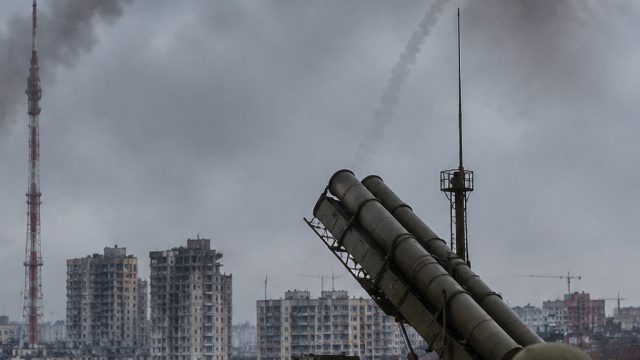
Recent military engagements have put Russia's air defense capabilities under intense scrutiny, revealing significant flaws that experts argue could reshape global security dynamics. As Ukraine launches a series of strategic attacks, international analysts are questioning the effectiveness of Russia's air defense, which has been touted as a formidable barrier against aerial threats. This analysis aims to shed light on why Russia's air defenses are failing and what it means for the ongoing conflict.
The Call for Stronger Defenses
Experts have pointed out that the recent surge of Ukrainian attacks has exposed a glaring vulnerability in Russia's military infrastructure. Reports suggest that a lack of advanced technological integration and outdated equipment has hindered Russia's ability to adequately defend its airspace. This brings into sharp focus the pressing need for Russia to enhance its defense systems.
Context of Recent Attacks
The context of these attacks cannot be overstated. With the ongoing conflict escalating, Ukraine's military has successfully launched operations that have effectively bypassed Russian defenses. Military analysts believe these operations demonstrate a strategic advantage that Ukraine has leveraged brilliantly.
- Increased drone attacks that evade traditional radar systems.
- Coordinated strikes utilizing advanced technology.
- Psychological warfare tactics that demoralize Russian forces.
Expert Opinions on Defense Shortcomings
Western military experts have been vocal in their criticism. They suggest that Russia's air defense system, which relies heavily on Soviet-era technology, is ill-equipped to handle modern warfare dynamics. This has led to a questioning of Russia's military strategy as a whole.
One expert noted, "The Russian air defense has not adapted to the new forms of warfare, particularly the use of unmanned aerial vehicles (UAVs) by Ukraine. This failure means that critical infrastructure is left vulnerable to attacks."
International Reactions and Implications
The implications of these deficiencies are not just limited to the battlefield; they extend to international relations and security strategies around the globe. As countries monitor the unfolding situation, there is growing concern about the reliability of Russia's military posture.
Broader Impact on Global Security
The efficacy of Russia's air defenses can influence geopolitical alliances and provoke shifts in military spending among neighboring countries. Nations may feel compelled to enhance their own defense systems, resulting in a potential arms race.
- Increased military budgets among Eastern European nations.
- Reevaluation of alliances in NATO and beyond.
- Heightened security measures in response to perceived threats.
Future of Russian Military Strategy
In light of these developments, Russia may be forced to reevaluate its military strategies and focus on modernizing its air defense capabilities. This shift could lead to significant changes in how Russia engages with potential threats and partners.
Conclusion: A Crucial Time for Military Assessment
As this situation unfolds, the need for a comprehensive assessment of military strategies and defenses is abundantly clear. The shortcomings of Russia's air defenses highlight an urgent necessity for modernization and adaptation, particularly in response to evolving combat scenarios. For industry observers and analysts alike, it is a crucial time to monitor how Russia addresses these deficiencies and the broader implications it may have for global security. The current atmosphere of heightened tensions reinforces the importance of adaptability in military readiness and the necessity for nations to invest in advanced technologies.